

What is UG tank waterproofing?
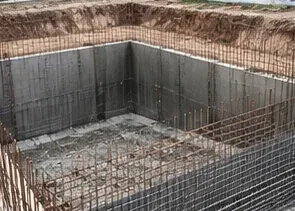
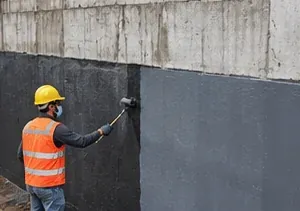
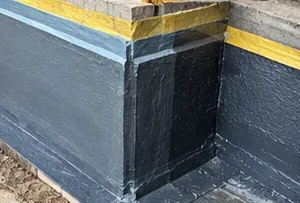
UG tank waterproofing is the treatment of below-ground reinforced concrete water storage tanks and sumps so that they neither leak nor allow groundwater in. On new tanks, the best protection is an external membrane that is continuous with the substructure, combined with waterstops at construction joints and sealed pipe sleeves, plus an internal waterproof coating.
On existing tanks, the work is done from inside: the tank is emptied and cleaned, leaks are sealed with PU injection, damaged concrete is repaired, and a crystalline or cementitious coating approved for contact with drinking water is applied.
Benefits
- Stops loss of stored water and entry of contaminated groundwater
- Internal coatings selected for contact with drinking water
- Pipe sleeves and joints detailed, where most tank leaks start
- Protects tank reinforcement from long-term corrosion
Common problems and applications
Problems it solves
- Tank losing water when the supply is off
- Muddy or discoloured water after rain, indicating groundwater entry
- Leaks around inlet, outlet and overflow pipe sleeves
- Cracks and damp patches on the outer wall seen from the basement
- Spalling plaster and exposed reinforcement inside the tank
Where it is used
- Domestic water UG tanks and sumps in housing societies
- Fire-fighting water tanks
- Flushing and recycled water tanks
- Rainwater harvesting tanks
- Tanks under construction in new buildings
Our UG tank waterproofing process
Empty, clean and inspect
The tank is emptied, desilted and pressure-washed. We inspect walls, floor, joints and pipe sleeves, and mark cracks and leak points.
Seal active leaks
Running leaks through cracks, joints and sleeves are sealed with PU injection grouting.
Repair concrete
Loose plaster and weak concrete are removed and rebuilt with polymer-modified repair mortar after reinforcement treatment.
Detail joints and sleeves
Floor-wall junctions are coved, and pipe sleeves are sealed with non-shrink grout, sealant or puddle-flange details.
Apply internal coating
A crystalline or polymer-modified cementitious coating suitable for drinking water is applied in the specified number of coats.
Cure, test and refill
The coating is cured, the tank is filled and water levels are monitored over the test period before handover.
Materials and systems used
- Crystalline waterproofing slurry
- Penetrates concrete pores and blocks them as crystals grow in the presence of moisture.
- Potable-grade cementitious coatings
- Flexible coatings with certification for contact with drinking water.
- PU injection resins
- For sealing active leaks before coating.
- Non-shrink grouts and sealants
- For pipe sleeves and joints.
- External membranes for new tanks
- HDPE or bituminous systems continuous with the substructure waterproofing.
Products are selected from the approved specification. Coverage, thickness and curing follow the manufacturer's current data sheet.
Why professional waterproofing is important
Drinking water tanks need a different approach from other below-ground structures. Products must be safe for potable water, surfaces must be properly cleaned and disinfected before refilling, and the source of each leak must be treated rather than covered.
A professional contractor also checks the outside conditions: an internal coating alone cannot resist strong groundwater pressure if cracks are left untreated. Sealing leaks first, then coating, gives a tank that holds water and keeps groundwater out.
Why choose us
- Drinking-water-safe systems
- We use coatings with certification for potable water contact.
- Leaks sealed before coating
- Injection and joint repairs come first, so the coating is not fighting running water.
- Society-friendly scheduling
- We plan tank shutdowns with the committee to minimise supply disruption.
- Records for the society
- Before and after photos, method and product details are handed over.
Read more about our team and how we inspect and record work.
Work photographs
Frequently asked questions
Which waterproofing system is suitable for underground water tanks?
For a new underground tank, the best protection is an external membrane (HDPE or bituminous) continuous with the substructure waterproofing, waterstops at construction joints, sealed pipe sleeves and an internal cementitious or crystalline coating.
For an existing tank, the outside cannot be reached, so active leaks are first sealed by PU injection, damaged concrete is repaired, and a crystalline or polymer-modified cementitious coating certified for contact with drinking water is applied inside. Paints and coatings that are not approved for potable water should not be used in drinking water tanks.
How long does a UG tank need to be out of use?
It depends on the size, the condition and the coating cure time. A typical domestic tank is planned over a few days, including cleaning, repairs, coating and curing. We confirm the duration after inspection.
Is the coating safe for drinking water?
We use products certified for contact with potable water and follow the manufacturer's curing and flushing instructions before the tank is refilled.
Can you waterproof the tank without emptying it?
Internal treatment requires the tank to be empty and dry. Leaks visible from an adjacent basement can sometimes be injected from that side while the tank is in use.
Is this different from overhead tank waterproofing?
The principles are similar, but overhead tanks face sun and wind instead of groundwater. See water tank waterproofing.


