

What is complete building waterproofing?
Complete building waterproofing is a coordinated programme covering every part of a building that can leak: basement and lift pit, underground and overhead tanks, STP, podium, terrace and mumty roofs, balconies and chajjas, bathrooms and toilets, external walls and joints.
It starts with a condition survey that records leaks, structural defects and the condition of existing treatments. The output is a plan that orders the work by urgency and logic, for example terrace and tanks before internal repairs, so money is not spent twice.
Benefits
- One survey and plan instead of piecemeal repairs
- Work sequenced so that each repair is not undone by another leak
- Single point of accountability for the whole building
- Combined waterproofing and concrete repair where both are needed
Common problems and applications
Problems it solves
- Multiple flats reporting leaks with no clear source
- Repeated repairs on the same areas every monsoon
- Terrace, tank and bathroom problems interacting
- Structural repairs needed alongside waterproofing
- Society committees needing a clear budget and priority list
Where it is used
- Housing societies, including buildings undergoing structural audit
- Commercial and office buildings
- Institutional buildings such as schools and hospitals
- Developers preparing buildings for handover
Our complete building waterproofing process
Condition survey
We inspect every accessible area and record leaks, cracks, spalling and existing treatments, with photographs.
Diagnosis and priorities
Leak sources are linked to symptoms, and work is ordered by urgency and dependency.
Proposal and method statements
A scope with methods, systems and phasing is prepared for the committee or client.
Phased execution
Work proceeds in agreed phases, typically terrace and tanks first, then external walls, wet areas and basement.
Inspection and testing
Each phase is inspected and water-tested where applicable.
Handover file
A building record of what was treated, where and with what, for future maintenance.
Materials and systems used
- Membranes and coatings
- Selected for each element: terrace, podium, tanks, wet areas and basement.
- PU injection resins
- For leaking cracks and joints.
- Repair mortars and protective coatings
- Where concrete repair is part of the scope.
- Joint systems
- Sealants and tape systems for expansion joints.
Products are selected from the approved specification. Coverage, thickness and curing follow the manufacturer's current data sheet.
Why professional waterproofing is important
Water moves through buildings in unexpected ways. A leak in a top-floor bedroom may come from the overhead tank, and a wet basement wall may be fed by a cracked podium drain. Treating symptoms one at a time costs more and frustrates residents.
A building-wide survey and plan makes sure the right work is done in the right order, with one contractor responsible for the result.
Why choose us
- Whole-building view
- We survey the full building before proposing any single repair.
- Clear priorities and budgets
- Committees receive a phased plan they can approve step by step.
- Waterproofing and repair in one team
- Concrete repair, injection and membranes coordinated together.
- Documented results
- A handover file that the society can use for future maintenance.
Read more about our team and how we inspect and record work.
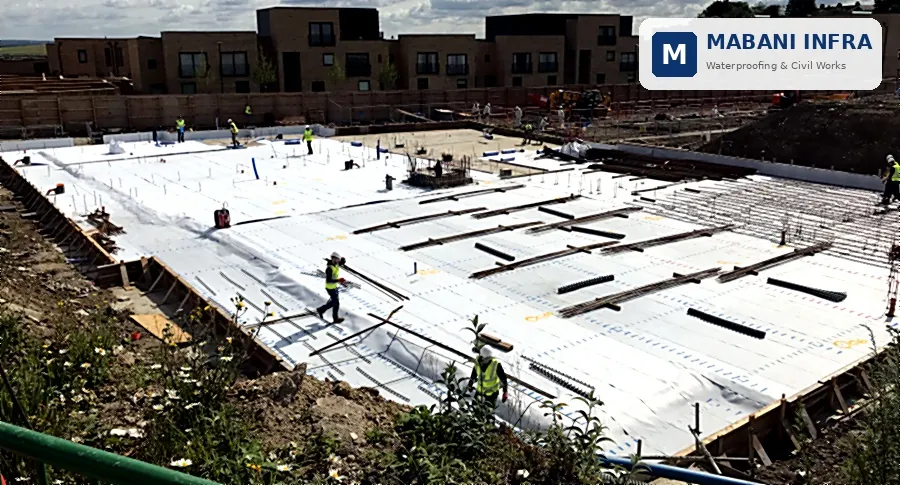
Work photographs
Frequently asked questions
Where should a housing society start with waterproofing?
Usually with a building-wide survey, then the work that stops water entering the building envelope: the terrace, overhead tanks and external walls. Internal repairs such as bathrooms and ceilings follow, because repairing them first only to have water return from above wastes money. A structural audit, if one exists, also guides which concrete repairs are urgent.
Is complete building waterproofing more expensive than individual repairs?
The total scope may be larger, but it avoids paying for repeated repairs. A phased plan lets the society spread cost over time while doing the most important work first.
Can the work be done while residents live in the building?
Yes. Work is phased and planned around residents, with notice for any area that needs access inside flats.
Do you work with structural auditors?
Yes. Where a structural audit report exists, we align the waterproofing plan with its recommendations and carry out the structure repair and rehabilitation where required.


