

What is structure repair and rehabilitation?
Structure repair and rehabilitation restores damaged reinforced concrete so that members are sound, protected against further corrosion and fit for their intended use. It covers everything from patch repair of spalled concrete to rehabilitation of whole columns, beams and slabs, and the sealing or bonding of cracks.
It is useful to separate two kinds of work. Concrete repair reinstates the original member: damaged concrete is removed, the reinforcement is treated and the section is rebuilt. Structural strengthening increases capacity beyond the original design, for example by column jacketing or carbon fibre (CFRP) strengthening, and must be designed by a structural engineer. We execute both, but we do not make claims about load capacity that only an engineer's assessment can support.
Benefits
- Stops corrosion damage from progressing and protects the reinforcement
- Restores cover and section to columns, beams, slabs and chajjas
- Removes the risk of falling concrete in occupied buildings
- Cracks treated with the right method: epoxy, PU injection, sealing or stitching
- Leaks that caused the damage are stopped by the same team
Structural concrete repair
Deteriorated concrete is repaired by removing every weak, cracked and delaminated area back to sound material, then rebuilding the section with compatible repair materials. The goal is a dense, well-bonded repair that protects the steel for many years, not a cosmetic plaster patch.
- Mapping of damaged and hollow-sounding concrete by tapping survey
- Controlled concrete removal with square-cut edges, to sound concrete and behind corroded bars
- Surface preparation: cleaning, roughening and saturating the substrate as the system requires
- Exposed reinforcement cleaned and coated with anti-corrosion primer
- Polymer-modified repair mortar applied in layers, or flowable micro-concrete in formwork for deep and large repairs
- Concrete reinstatement, curing and finishing, followed by a protective coating
RCC column, beam and slab rehabilitation
Columns, beams and slabs show distress first where moisture is highest: stilt parking, basements, podium soffits, chajjas, balconies and staircases. Rehabilitation restores these members after corrosion, spalling, honeycombing or impact damage.
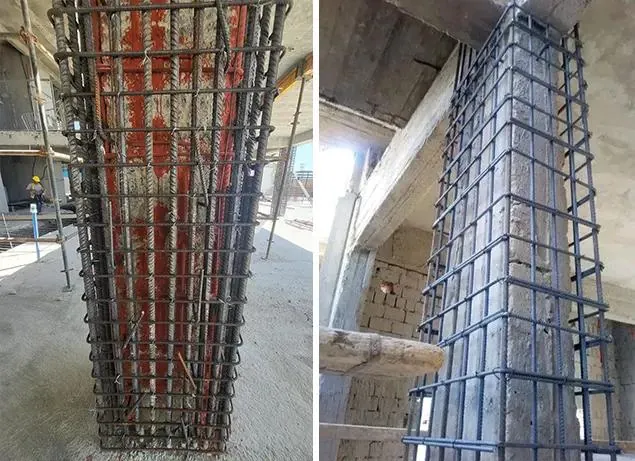
- RCC column rehabilitation, including repair of corroded main bars and ties
- RCC beam repair and slab soffit repair
- Treatment of concrete spalling and delamination
- Reinforcement corrosion treatment and replacement of bars that have lost section, to the engineer's design
- Restoration of the member with repair mortar or micro-concrete
- Column jacketing with new reinforcement and micro-concrete where the engineer specifies added capacity
Columns and beams are load-bearing. Temporary propping is installed to the approved layout before concrete is removed, and break-out follows the sequence set by the structural engineer.
Concrete crack repair and injection
Cracks are first assessed: width, depth, pattern, whether they are moving, dry or leaking, and whether they are structurally significant. The repair method then follows the diagnosis rather than filling every crack the same way.
- Structural and non-structural crack assessment, with monitoring where movement is suspected
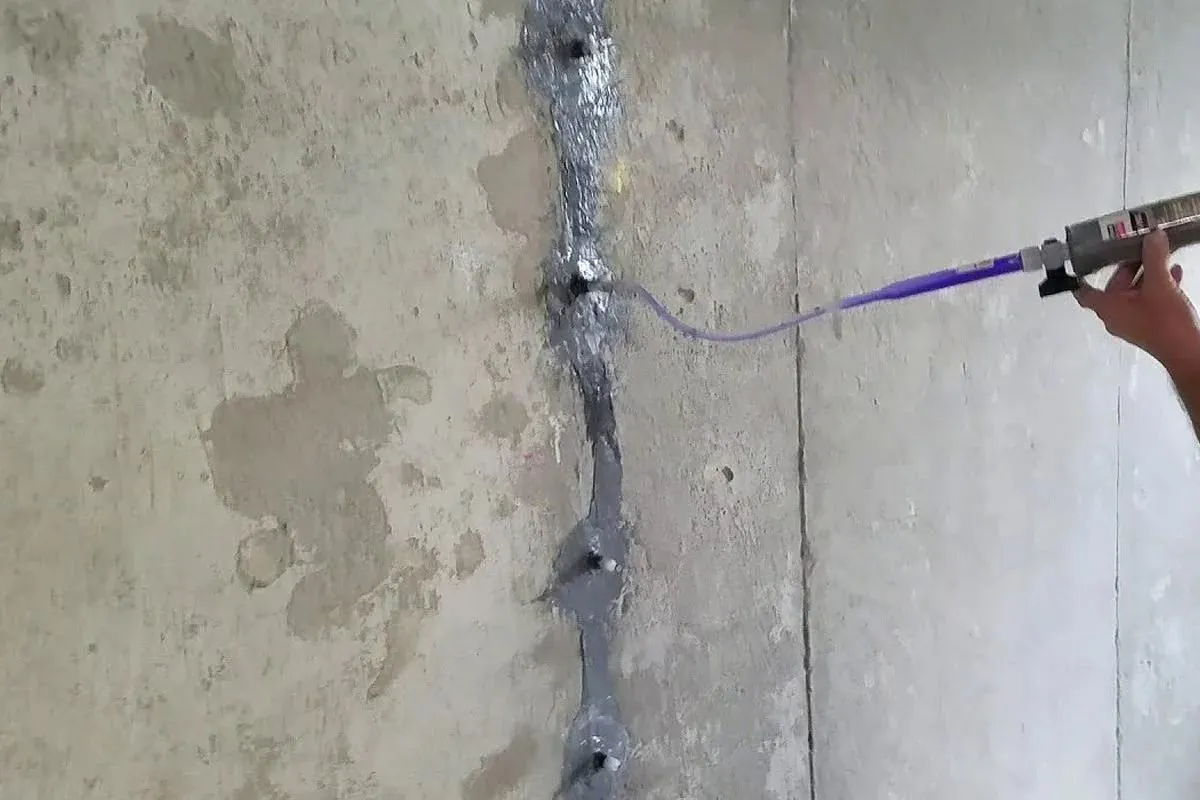
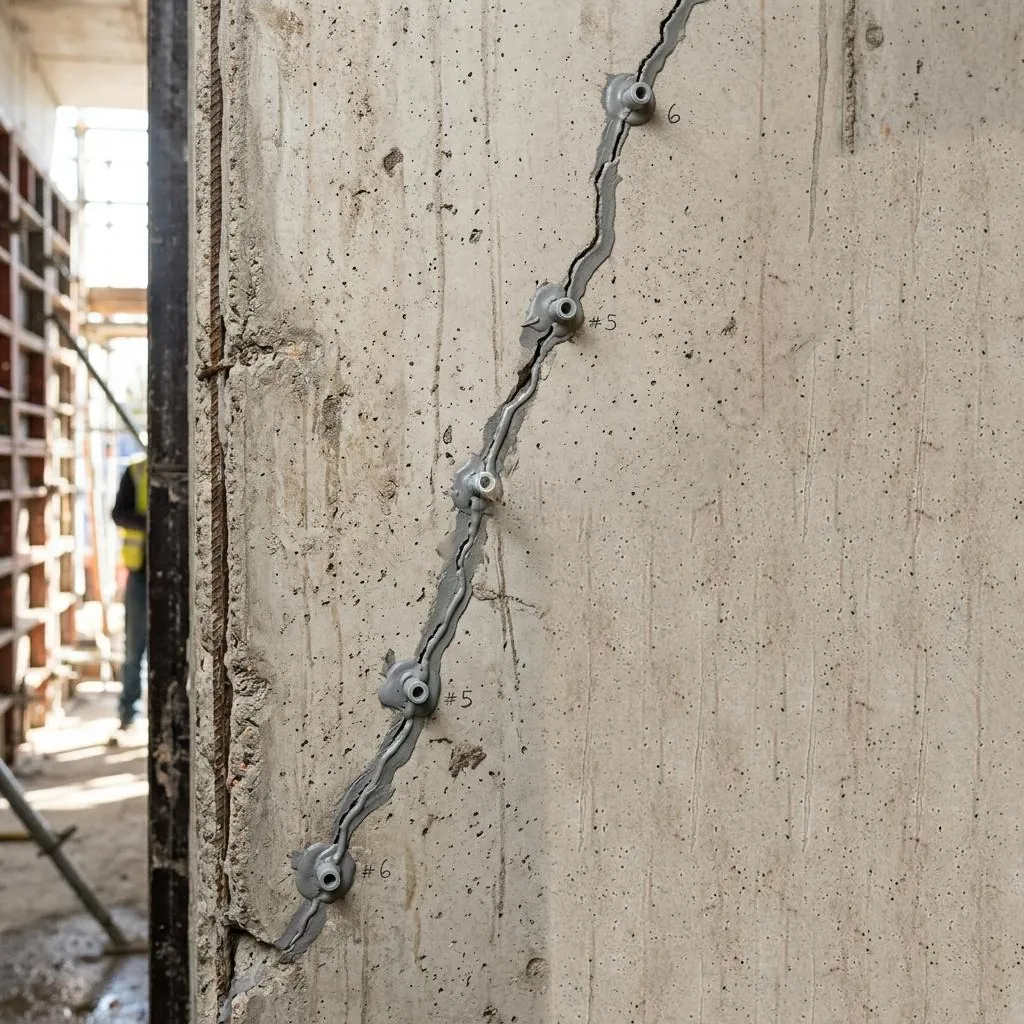
- Epoxy injection for suitable dormant structural cracks, to bond the faces and restore continuity
- PU injection grouting for water-leaking cracks and joints
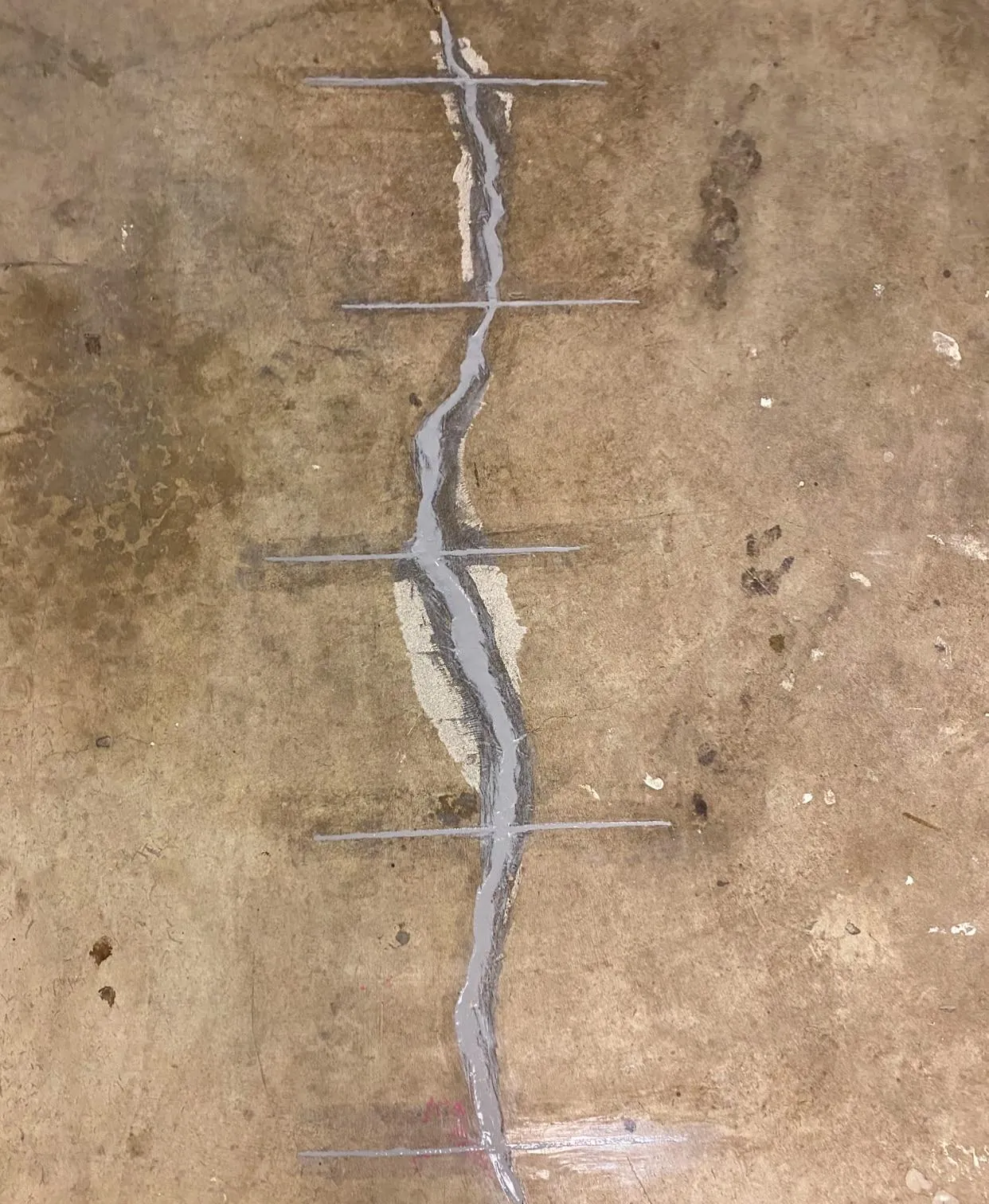
- Routing and sealing with elastomeric sealant for cracks that continue to move
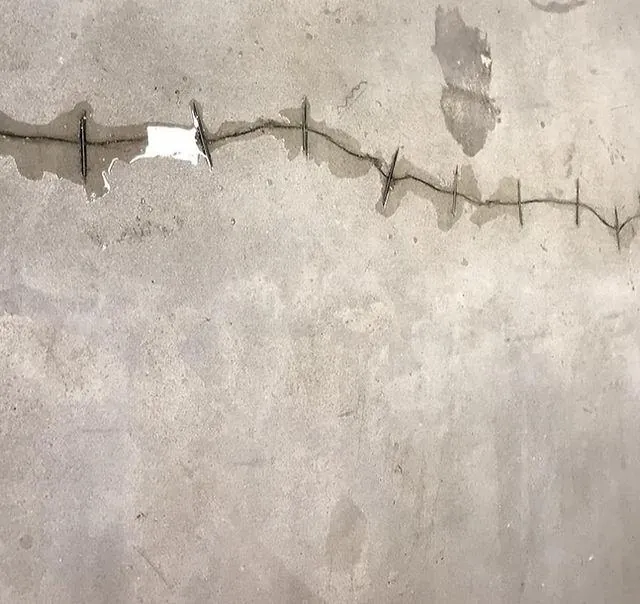
- Crack stitching with staples or bars bonded across the crack, where the engineer requires tensile reinforcement
- Surface sealing and protective treatment after injection
Reinforcement corrosion treatment
Corrosion is the root cause of most concrete deterioration in Mumbai buildings. Treating it properly means exposing the full length of corroded steel, not just the visible rust stain.
- Removal of carbonated and chloride-contaminated concrete around corroding bars
- Exposed reinforcement cleaned by wire brushing or abrasive blasting to remove rust and scale
- Rust-inhibiting protective coating on the cleaned steel
- Assessment of section loss, with repair recommendations referred to the structural engineer
- New bars lapped or anchored where section loss is beyond the engineer's limit
- Concrete reinstatement and an anti-carbonation coating to slow future corrosion
Structural strengthening and rehabilitation
When a member must carry more than it was designed for, or has lost too much capacity to be simply repaired, strengthening is required. This is engineering work: the structural consultant assesses the structure and designs the strengthening, and we execute it to their drawings and hold points.
- RCC member strengthening by column jacketing with additional reinforcement and micro-concrete
- Carbon fibre (CFRP) strengthening of columns, beams and slabs, offered as a separate specialised service
- Repair and rehabilitation of deteriorated structures following a structural audit
- Coordination with structural consultants wherever engineering assessment or design approval is required
Common problems and applications
Problems it solves
- Spalling concrete and exposed, rusted reinforcement
- Cracks running along the line of reinforcement
- Hollow-sounding (delaminated) concrete on slabs and beams
- Cracked and corroded columns at stilt and basement levels
- Structural and leaking cracks in walls, slabs and beams
- Honeycombing and poor-quality concrete in older construction
Where it is used
- Housing societies following structural audit recommendations
- Stilt parking, basement and podium structures
- Commercial and industrial buildings
- Water tanks, STPs and podium soffits
- Staircases, chajjas, balconies and refuge floors
- Redevelopment and change-of-use projects
Our structure repair and rehabilitation process
Condition survey and diagnosis
Tapping survey, crack mapping and opening up concrete for inspection, alongside the structural engineer's tests and audit findings.
Method statement and approvals
The repair scope, materials and sequence are agreed with the client and consultant before work starts.
Propping and safety
Temporary props and barricades are installed where concrete removal affects load paths.
Concrete removal and reinforcement treatment
Damaged concrete is removed to sound material and behind the bars; steel is cleaned, primed and supplemented where the engineer requires.
Crack repair
Cracks are injected with epoxy or PU, sealed or stitched according to their type.
Reinstatement
Sections are rebuilt with polymer-modified repair mortar or micro-concrete, then cured.
Protection and records
An anti-carbonation or protective coating is applied, and inspection records with photographs are handed over.
Materials and systems used
- Polymer-modified repair mortars
- Hand-applied in layers for patch repairs on columns, beams and soffits.
- Micro-concrete
- Flowable, non-shrink concrete for deep repairs and column jackets poured in formwork.
- Rebar primers and corrosion inhibitors
- Protect cleaned reinforcement before rebuilding.
- Epoxy injection resins and bonding agents
- Bond dormant structural cracks and improve adhesion between old and new concrete.
- PU injection resins
- Seal leaking cracks and joints in wet conditions.
- Anti-carbonation and protective coatings
- Slow the ingress of carbon dioxide, chlorides and moisture.
Products are selected from the approved specification. Coverage, thickness and curing follow the manufacturer's current data sheet.
Why professional structure repair matters
Patching cracks with plaster hides the problem but leaves the corroding steel behind. Within a season or two the cracks return and the damage is larger. In load-bearing members, poor repair can also be a safety risk: breaking out a loaded column without propping, or removing too much concrete at once, can be dangerous.
Professional structure repair follows the engineer's design, removes concrete to the right depth, treats the steel correctly, props members when needed and uses repair materials compatible with the existing concrete. Each step is inspected and recorded, so the society or owner has evidence of what was done.
Why choose us
- Engineer-led methodology
- We execute the structural consultant's specification and keep records for their inspection.
- Propping and sequence discipline
- No break-out of load-bearing members without the approved propping in place.
- Repair, injection and strengthening in one team
- Concrete repair, crack injection, jacketing and CFRP are coordinated together.
- Leaks stopped at the source
- We also carry out the waterproofing that prevents the damage from returning.
- Occupied-building practice
- Barricading, dust control and clear communication with residents.
Read more about our team and how we inspect and record work.
Work photographs
Frequently asked questions
How are structural cracks in RCC columns repaired?
First the cause is established: cracks along the line of the bars usually mean reinforcement corrosion, while diagonal or wide cracks may indicate overloading and need a structural engineer's assessment.
Corrosion cracks are repaired by removing the cracked concrete, cleaning and priming the steel and rebuilding the section with repair mortar or micro-concrete. Dormant structural cracks are injected with low-viscosity epoxy to bond the faces. Where the column has lost capacity, the engineer may specify column jacketing or carbon fibre (CFRP) wrapping. Load-bearing columns are propped before any concrete is removed.
What is structure repair and rehabilitation?
It is the repair of deteriorated reinforced concrete so that members are sound and protected again: removing damaged concrete, treating corroded reinforcement, rebuilding sections, repairing cracks and, where an engineer specifies it, strengthening members to carry more load.
What causes RCC column and beam deterioration?
Mainly corrosion of the reinforcement. Moisture, chlorides from the coastal air and carbonation of the concrete allow the steel to rust; rust occupies more volume than steel, so it cracks and pushes off the cover. Leaks, poor original concrete, low cover and overloading make it worse.
How is concrete spalling repaired?
The loose and delaminated concrete is removed to sound material and behind the corroded bars, the steel is cleaned and coated with a rust-inhibiting primer, a bonding coat is applied and the section is rebuilt with polymer-modified repair mortar or micro-concrete, followed by curing and a protective coating.
How are cracks in RCC structures treated?
After assessment. Dormant structural cracks are usually bonded by epoxy injection; leaking cracks are sealed by PU injection; moving cracks are routed and sealed with a flexible sealant; and cracks needing tensile reinforcement are stitched. Cracks along reinforcement are treated as corrosion damage.
What is the difference between epoxy and PU injection?
Epoxy injection fills a dry, dormant crack and bonds its faces, restoring structural continuity. PU (polyurethane) injection is used to stop water: it reacts with moisture, works in wet and leaking cracks and stays flexible. See PU injection grouting.
How is reinforcement corrosion treated?
Contaminated concrete around the bars is removed, the steel is cleaned to remove rust and scale, a protective primer is applied, bars with excessive section loss are supplemented as the engineer directs, and the concrete is reinstated and coated to slow future corrosion.
When does a building require structural rehabilitation?
When there is widespread spalling or exposed reinforcement, cracked or corroded columns and beams, cracks that are widening, or when a structural audit recommends repairs. Changes in use or added loads may also call for strengthening.
Does structural concrete repair require an engineering assessment?
For load-bearing members and building-wide repairs, yes. The structural engineer decides the scope, the repair depth, propping and whether added reinforcement or strengthening is needed. Small non-structural patch repairs may not need a full assessment, but we will tell you when one is advisable.
Which structural repair services are available in Mumbai?
Mabani provides structural concrete repair, RCC column, beam and slab rehabilitation, column jacketing, concrete crack repair by epoxy and PU injection, crack stitching, reinforcement corrosion treatment, protective coatings and carbon fibre (CFRP) strengthening across Mumbai and the surrounding region.


