- Home
- Waterproofing Services
- Basement and Substructure
- Underground Tanks and Lift Pits
Underground Tank Waterproofing Contractor in Mumbai
UG water tanks and lift pits: internal and external waterproofing, for new and existing tanks.
Underground water tank waterproofing
Mabani Infra is an underground tank waterproofing contractor in Mumbai, waterproofing UG water tanks and lift pits in residential, commercial and institutional buildings, for new construction and for existing tanks that leak.
An underground tank works against water from both sides. Stored water presses outward, and in Mumbai's high groundwater conditions, groundwater presses inward, especially in the monsoon. Leaks usually start at the same weak points: construction joints between the base and the walls, tie-rod holes, pipe sleeves and honeycombed concrete.
Scope of underground tank waterproofing
- Internal and external waterproofing as appropriate.
- Surface preparation and repair of honeycombed or damaged concrete.
- Treatment of construction joints, tie-rod holes and pipe penetrations.
- PU injection grouting of active leaks.
- Compatible waterproofing coatings or membrane systems.
- Flood testing or other specified quality checks.
Potable water. For drinking water tanks the product system must be suitable for contact with drinking water, as stated in its data sheet and your specification. Sewage and wastewater tanks need a different approach: see STP tank waterproofing.
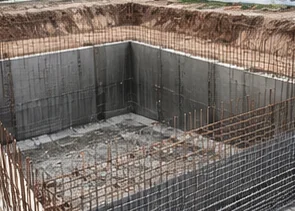
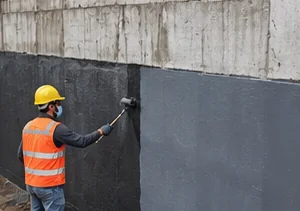
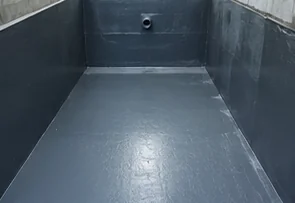
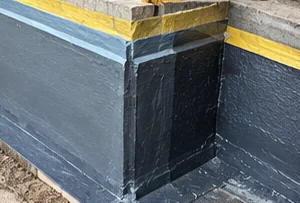
Representative images of each work stage.
Lift pit waterproofing
Lift pits are usually the lowest point of a building, so they are the first place groundwater appears. A wet lift pit damages equipment and is difficult to fix once the lift is installed.
- Assessment of water ingress and groundwater conditions.
- Surface preparation and defect treatment.
- PU injection grouting where appropriate.
- Membrane or coating systems as specified.
- Joint, crack and pipe penetration detailing.
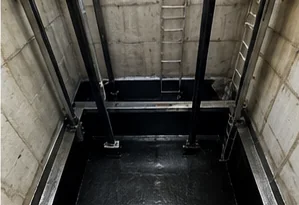
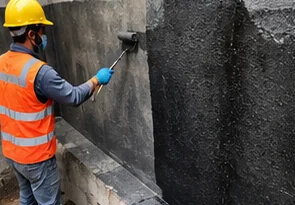
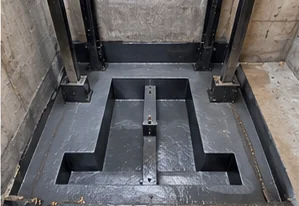
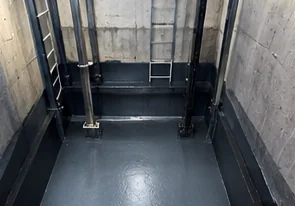
Representative images of each work stage.
New tanks and existing tanks
New construction
Waterproofing is planned with the structure: joint treatment and external waterproofing before backfilling, then internal waterproofing, curing and testing before the tank is commissioned. See new construction waterproofing.
Existing tanks
The tank is drained and cleaned, leaks are traced, cracks and joints are sealed with injection grouting where needed, damaged concrete is repaired, and an internal system is applied, cured and tested.
Underground tank waterproofing: frequently asked questions
Should an underground tank be waterproofed internally or externally?
Where the outside face is accessible during construction, external waterproofing keeps groundwater out of the concrete and internal waterproofing keeps stored water in. For an existing tank, the outside is usually buried, so the work is done from inside: crack and joint treatment, PU injection grouting where leaking, then an internal waterproofing system.
Is the waterproofing safe for drinking water tanks?
Only if the product is approved for contact with potable water. For drinking water tanks we use a system whose technical data sheet states it is suitable for potable water, and that is accepted in the project specification.
Can an existing leaking underground tank be repaired?
Yes, usually. The tank is drained, cleaned and inspected. Leaking cracks and joints are sealed, damaged concrete is repaired, the internal waterproofing is applied and cured, and the tank is filled and checked before it goes back into use.
How is the waterproofing tested?
Typically by a water-tightness or flood test after curing, with the water level observed over the period set in the specification. Results are recorded with the stage inspection records.
Tell us about your project
Send the structure, location and scope. For a site visit, include a preferred date. Inquiries go straight to our operations team at operations@mabani.in.