- Home
- Waterproofing Services
- Basement and Substructure
Basement Waterproofing Contractor in Mumbai
Substructures, UG tanks and lift pits, with HDPE, SBS and PU injection systems.
Basement and substructure waterproofing
One service category covering substructures, underground water tanks and lift pits, delivered with membrane systems and injection grouting.
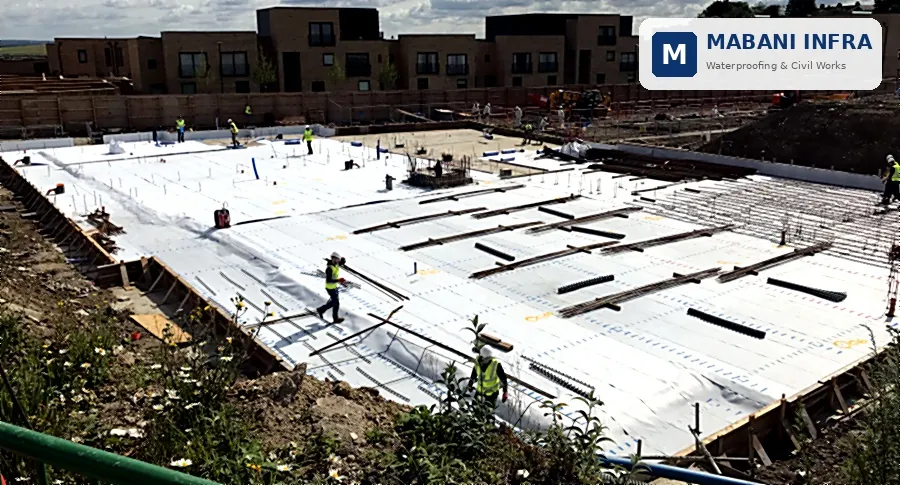
As a basement waterproofing contractor in Mumbai, we work on rafts, retaining walls, basements, underground tanks and lift pits, for new construction and existing buildings. Below-ground structures face groundwater, hydrostatic pressure and limited access once construction is complete. The waterproofing is therefore designed, detailed and inspected before backfilling or covering.
Membrane systems and injection grouting are different tools
| Approach | What it is | Typically used for |
|---|---|---|
| Membrane waterproofing (HDPE, SBS) | A continuous waterproofing layer installed over a prepared surface, with sealed laps and detailed terminations. | Rafts, retaining walls, slabs and tank surfaces where a membrane can be installed to a design build-up. |
| Injection grouting (PU) | Resin injected through packers into cracks, joints and voids to stop or reduce water movement. | Treating active leaks, cracks, construction joints and honeycombed areas in existing concrete. |
Specification note. The right system depends on the substrate, water pressure, exposure, design requirements and project specification. We confirm the system against the approved specification and the manufacturer's current data sheet.
Substructure waterproofing
- Foundation and substructure waterproofing.
- Raft and retaining wall protection.
- Waterproofing of below-ground structures.
- Selection of membrane systems based on site conditions.
- Protection boards and detailing at joints and penetrations where specified.
Underground water tank waterproofing (UG tank)
- Internal and external waterproofing as appropriate.
- Surface preparation.
- Treatment of construction joints and penetrations.
- Compatible waterproofing coatings or membrane systems.
- Flood testing or other specified quality checks.
For potable water tanks, the product system must be suitable for contact with drinking water as stated in its data sheet and your specification.
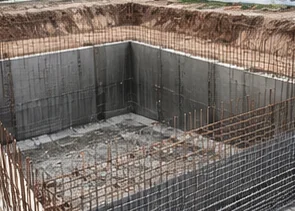
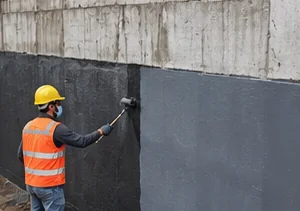
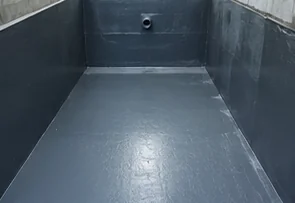
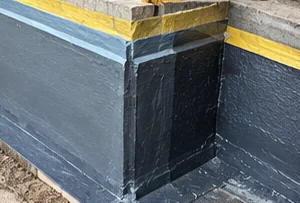
Representative images of each work stage.
Lift pit waterproofing
- Assessment of water ingress and groundwater conditions.
- Surface preparation and defect treatment.
- PU injection grouting where appropriate.
- Membrane or coating systems as specified.
- Joint, crack and pipe penetration detailing.
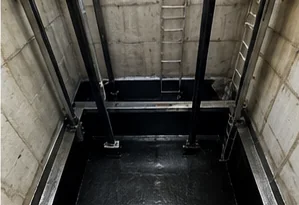
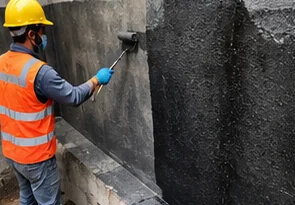
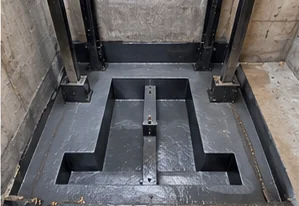
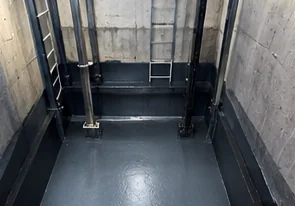
Representative images of each work stage.
Waterproofing technologies
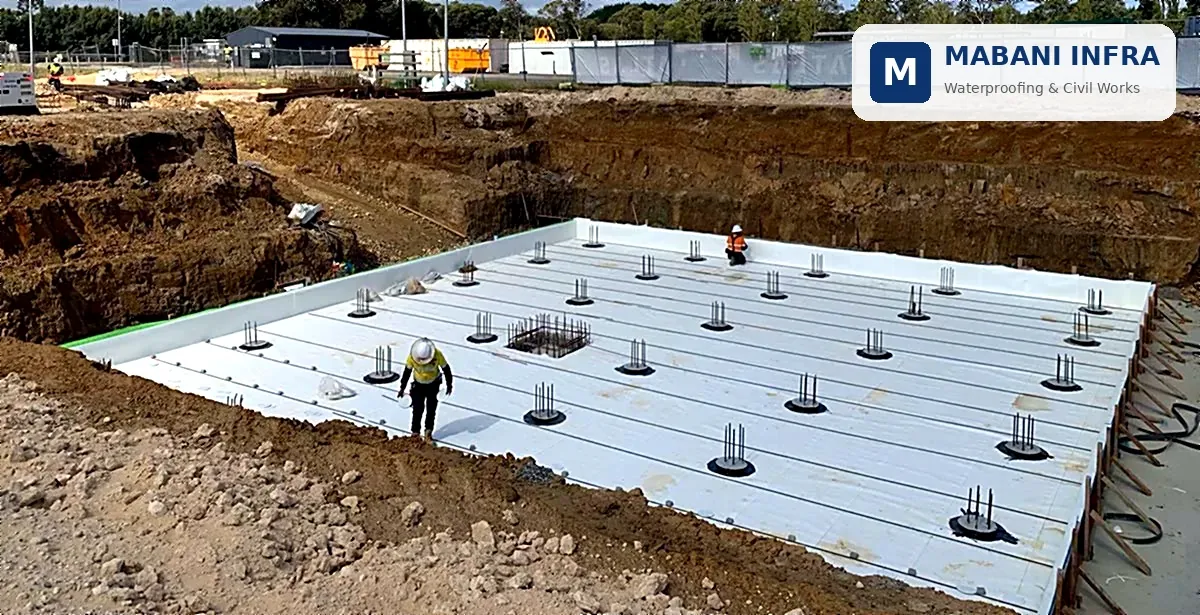
HDPE membrane waterproofing
A sheet membrane system for below-ground structures, installed over a prepared base with sealed laps and detailed terminations.
Suitable applications
- Rafts and foundations.
- Retaining walls and basement walls.
- Below-ground structures where a membrane build-up is specified.
Installation procedure
- Inspect and prepare the substrate or blinding layer.
- Set out the sheets and detail corners, upstands and penetrations first.
- Install the membrane and seal laps as per the manufacturer's method.
- Inspect laps and terminations and repair any defects.
- Install the specified protection layer before reinforcement or backfill.
SBS modified bituminous membrane waterproofing
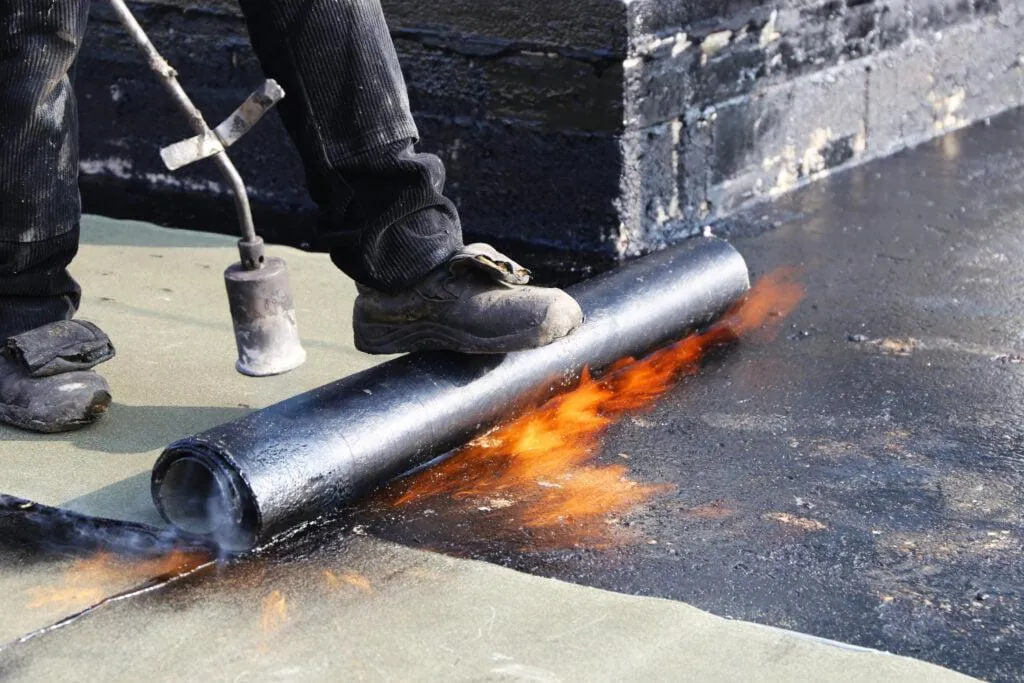
A bituminous sheet membrane modified with SBS polymer, applied over a primed surface and protected before covering.
Suitable applications
- Slabs, podiums and terraces.
- Substructure surfaces where a bituminous membrane is specified.
Installation procedure
- Prepare the surface and treat cracks and defects.
- Apply the primer specified for the membrane.
- Install the sheets with laps and end laps as per the manufacturer's method.
- Detail upstands, drains and penetrations.
- Inspect laps and protect the membrane with the specified layer.
PU injection grouting
Injection grouting is a repair method, not a membrane. Read more about PU injection waterproofing. Resin is injected into cracks, joints and voids to stop or reduce water movement through concrete.
Suitable applications
- Active leaks through cracks and joints.
- Construction joints and honeycombed areas.
- Leaking lift pits, tanks and basement walls.
Installation procedure
- Survey and mark the leaking cracks and joints.
- Drill and fix injection packers along the crack as per the method statement.
- Flush where specified, then inject the resin from one end, progressing along the crack.
- Observe resin flow and repeat injection where required.
- Remove packers, make good the surface and re-inspect for leakage.
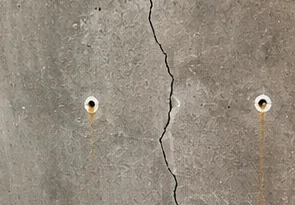
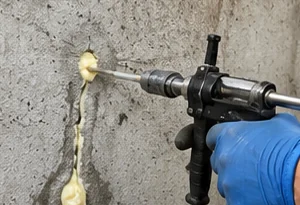
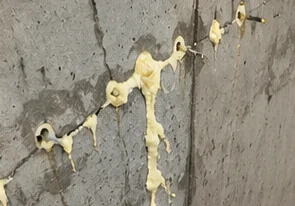
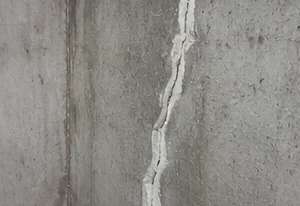
Representative images of each work stage.
Basement waterproofing: frequently asked questions
Which is better for a basement, HDPE or SBS membrane?
Neither is better everywhere. HDPE sheet membranes are commonly used under rafts and against retaining walls; SBS membranes suit slabs and surfaces where a bituminous membrane is specified. The choice depends on groundwater, the construction method and the specification.
Can a leaking existing basement be waterproofed?
Usually from inside, because the outside face is buried. Leaking cracks and joints are sealed by PU injection grouting, and an internal system suitable for the water pressure is applied where specified.
When should basement waterproofing be planned?
Before excavation and raft work. Membranes under the raft and behind retaining walls must be installed as the structure goes up and cannot be reached later.
Tell us about your project
Send the structure, location and scope. For a site visit, include a preferred date. Inquiries go straight to our operations team at operations@mabani.in.